

7 advantages of a strong core go far beyond getting visible abs. A strong, well balanced core supports your spine, stabilizes your movements, reduces pain, and helps you stay more upright with less effort. When your core works properly, your back does not have to carry every load alone.
In this article, Back Hero USA breaks down the most important advantages of a strong core, how it protects your neck and back, and how you can train it safely. You will also see how tools like The Posture Corrector, Neck Stretcher, Butterfly Memory Foam Neck Pillow, and Lumbar Support Cushion make it easier to maintain good alignment while your core gets stronger over time.
In this article
What Is Your “Core” Really?

Many people think “core” means only the front abs. In reality, your core is a 360 degree system of muscles around your trunk. It includes:
- Deep abdominal muscles
- Side obliques
- Lower back muscles
- Pelvic floor
- Muscles around the hips
These muscles act like a natural corset. They support your spine, protect your discs and joints, and help you move in every direction. To enjoy the 7 advantages of a strong core, you do not need extreme workouts. You need consistent, smart activation that fits your body.
7 Advantages of a Strong Core
Here are 7 advantages of a strong core that matter for your posture, comfort, and long term spine health.
1. Better posture and spinal alignment

A strong core helps keep your spine in a neutral position instead of collapsing into a slouch or arching too hard. When your core is active:
- Your shoulders can relax instead of rounding forward
- Your head can sit more comfortably over your spine
- Your lower back does not have to overwork to hold you upright
This makes it easier to build and maintain good posture and works very well alongside posture corrector exercises you might discover in a guide like 12 Best Posture Corrector Exercises for Better Posture.
2. Less lower back pain

One of the biggest advantages of a strong core is how much it can reduce lower back strain. When your deep abdominal and hip muscles support your spine:
- Your lumbar joints absorb less pressure
- Your discs experience less uneven load
- Small daily tasks feel safer and more stable
For many people, consistent core work is one of the most effective “long game” strategies for lower back pain relief.
3. Easier everyday movement

Simple tasks like carrying groceries, lifting kids, doing housework, or getting in and out of the car all rely on core stability. With a strong core, you can:
- Twist and bend with more confidence
- React more quickly if you lose balance
- Move through your day with less fatigue
You feel more “connected” and less wobbly.
4. Better balance and coordination

Your core is the center of your body. When it is strong and responsive, it improves your balance.
- Standing on one leg feels more controlled
- Walking on uneven ground feels safer
- Sports, yoga, and gym movements feel smoother
Good balance also helps prevent falls as you age, which protects your spine, hips, and knees.
5. More power in sports and workouts

A strong core transfers power between your upper and lower body. Whether you run, lift weights, play soccer, or just enjoy long walks, core strength helps you:
- Push off the ground more strongly
- Support your joints during impact
- Keep technique better under fatigue
This means you get more from the exercise you already do.
6. Better breathing and energy
When your core and posture work together, your rib cage and diaphragm can move more freely. This helps your lungs expand more fully.
- Breathing feels deeper and easier
- Your body gets more oxygen for the same effort
- You feel more alert and less drained by the end of the day
Good breathing also calms the nervous system, which indirectly helps with pain control.
7. Greater confidence and body awareness

Standing taller, moving with control, and feeling less pain naturally boosts your confidence. A strong core improves:
- The way you carry yourself
- Your awareness of how you sit, stand, and move
- Your sense of control over your body
This is not just about looks. It is about feeling grounded and steady in your own body.
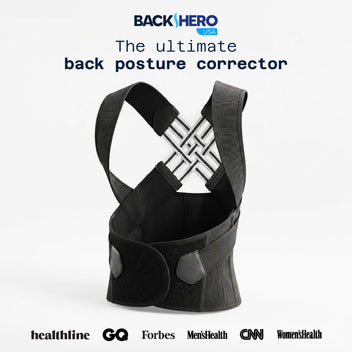
Back Hero USA Posture Corrector for Women & Men designed to heal, relieve upper back pain, and correct poor...
How Back Hero USA Tools Support Core Friendly Posture
Core work matters, but daily posture and support matter too. Back Hero USA tools are not a replacement for exercise. They are helpers that make it easier to hold good alignment while your core does its job.
Back Hero USA Posture Corrector

Back Hero USA Posture Corrector is designed to guide your shoulders and upper back into a healthier position. When your upper spine is more upright, your core can engage more naturally.
Key benefits:
- Encourages gentle shoulder retraction so you are less likely to slump
- Opens the chest so breathing and core activation feel easier
- Reduces neck and upper back strain that can interfere with core training
Key features:
- Lightweight, breathable fabric for daily comfort
- Adjustable straps to fit different body types
- Soft padding to minimize rubbing at the shoulders
- Slim design that can be worn under many tops
Back Hero works well in short sessions while working, studying, or scrolling, especially if you pair it with simple core drills you might see in a future guide like How to Fix Forward Head Posture – 10 Exercises To Try.
Neck Stretcher for upper spine tension

The Neck Stretcher gently supports your neck and upper spine in a decompressed position.
It helps you:
- Release tension around the base of the skull
- Reduce neck stiffness that can change your posture
- Make it easier to stack your head over your core muscles
When the top of your spine feels freer, your entire posture line benefits.
Butterfly Memory Foam Neck Pillow for overnight support

The Butterfly Memory Foam Neck Pillow keeps your neck aligned during sleep, which supports recovery from your daytime core work.
Benefits include:
- Keeps your neck in a neutral position in both back and side sleeping
- Reduces morning stiffness that can limit exercise
- Helps your spine rest in a more natural curve overnight
Good sleep posture multiplies the advantages of a strong core by giving your muscles a real chance to recover.
Lumbar Support Cushion for long sitting

The Lumbar Support Cushion fills the gap between your chair and lower back so your spine can keep its natural curve during long sitting.
It helps you:
- Avoid deep slouching that deactivates your core
- Share load more evenly between spine, hips, and core muscles
- Stay more comfortable during work, driving, or gaming
Think of it as a friendly reminder for your lumbar spine while your core gets stronger.
Simple Ways To Start Strengthening Your Core Safely
You do not need advanced routines to enjoy the 7 advantages of a strong core. Start small and stay consistent.
- Practice gentle exercises like dead bug, bird dog, and glute bridges a few times per week
- Add short posture breaks during work to reset your alignment
- Combine stretching of tight hips and chest with core activation
- Progress slowly so your back never feels “attacked” by sudden, intense workouts
If you are unsure where to begin, a chiropractor, physical therapist, or posture focused trainer can help you build a plan that fits your current level.
Conclusion
The 7 advantages of a strong core touch almost every part of your life. Better posture, less back pain, easier movement, improved balance, stronger performance, deeper breathing, and greater confidence all start from a stable, well trained center. Core strength is not only for athletes. It is one of the best long term investments you can make for your spine and overall comfort.
Frequently Asked Questions
1. Do I need gym equipment to build a strong core?
No. Many of the most effective core exercises use only your body weight, such as planks, dead bugs, bird dogs, and glute bridges.
2. Can a strong core completely fix my back pain?
A strong core can reduce back pain and protect your spine, but it is not a guarantee. Your posture, work setup, stress levels, and existing conditions also matter. Always check with a professional if pain is severe or persistent.
3. How often should I train my core?
Most people do well with gentle core training three to five times per week. You can start with short sessions and build up over time.
4. Can I overtrain my core?
Yes. If you train too hard or too often without rest, your muscles can become fatigued and your form can collapse, which may irritate your back. Focus on quality, not just quantity.
5. How quickly will I notice the advantages of a strong core?
Many people feel more stable and aware within a few weeks. Bigger changes in posture, comfort, and performance usually come after consistent practice over several months.

