

Does scoliosis get worse with age? It’s a question many people ask after a diagnosis in childhood, as a teen, or later in life. The honest answer is that scoliosis is usually a lifelong condition, and curves can change over time.. but not everyone’s spine behaves the same way. For some, the curve stays fairly stable; for others, it slowly progresses and needs closer monitoring or treatment.
This article of Back Hero USA is a non-medical guide to what “getting worse with age” really means. We’ll look at how scoliosis can evolve in teens and adults, which factors increase the risk of progression, and everyday ways to support your spine. You’ll also see how posture tools like a posture corrector, a pressure-relief seat cushion, and a lumbar support cushion can make sitting and moving more comfortable alongside your doctor’s care plan.
In this article
What Is Scoliosis and How Does It Behave Over Time?

Scoliosis is a sideways curve of the spine (often “S” or “C” shaped) that can also involve rotation of the vertebrae. Most cases are mild and are picked up in childhood or adolescence, often between ages 10 and 15.
Research shows scoliosis is generally a progressive condition meaning the curve can change over time, but the degree and speed of progression vary a lot from person to person.
Does Scoliosis Get Worse with Age? The Short Answer
In children and teens
In growing children and teenagers, scoliosis can worsen more quickly because the spine is lengthening and changing shape. Growth spurts are a major trigger for curve progression, which is why doctors monitor kids and teens closely.
- Small curves in skeletally immature patients might never become a big problem.
- Larger curves (especially over ~40–50° at the end of growth) have a higher risk of continuing to progress into adulthood.
In adults
So, does scoliosis get worse with age in adults? It can:
- Adults with adolescent idiopathic scoliosis may see slow progression, particularly if their curve was already moderate to large when they reached skeletal maturity.
- Older adults can also develop or worsen curves due to degenerative changes, wear and tear in discs, joints, and bones (sometimes called “adult-onset” or degenerative scoliosis).
- For many adults, progression is slow, sometimes around 1° per year in certain curve types, though that’s not a strict rule.
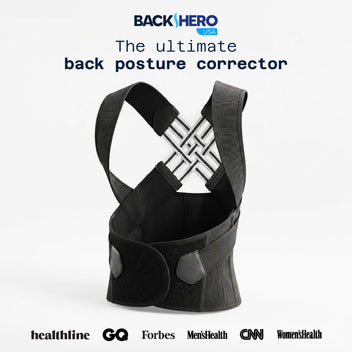
Back Hero USA Posture Corrector for Women & Men designed to heal, relieve upper back pain, and correct poor...
Factors That Influence Whether Scoliosis Gets Worse with Age

When you ask “Does scoliosis get worse with age?”, doctors look at several risk factors:
- Curve size (Cobb angle): Larger curves at skeletal maturity (often >40–50°) are more likely to progress.
- Type of scoliosis: Adolescent idiopathic scoliosis behaves differently from degenerative (age-related) scoliosis.
- Age and remaining growth: Younger patients with lots of growth ahead have a higher risk of faster progression.
- Sex: Females are more likely than males to experience progression in many forms of idiopathic scoliosis.
- Bone and joint health: Osteoporosis, disc degeneration, and arthritis can destabilize the spine in adulthood.
Your specialist considers these factors (and your symptoms) to decide how often to monitor you and what treatment options make sense.
Signs Your Scoliosis Might Be Changing
Only X-rays can truly measure curve progression, but everyday changes can suggest it’s time to check in with your doctor:
- Increasing or new back, neck, or hip pain.
- Feeling more tilted, hunched, or off-balance.
- Clothes hanging more unevenly than before.
- One shoulder, hip, or rib cage looking more prominent.
- More fatigue or stiffness after normal daily activities.
If you notice these changes, especially over weeks to months rather than years, it’s worth asking your provider for a reassessment.
Everyday Ways to Support Your Spine as You Age
You can’t control every aspect of scoliosis progression, but you can create a daily environment that’s kinder to your spine. These ideas don’t treat scoliosis, but they can reduce extra strain and improve comfort.
Make sitting more spine-friendly
Long hours in a chair can aggravate scoliosis-related discomfort. To support your back:
- Keep feet flat on the floor and hips/knees at roughly 90 degrees.
- Bring screens closer to eye level to avoid constant forward head posture.
- Choose chairs with back support or upgrade what you already have.
Two helpful support tools:
-
Lumbar Support Cushion: This cushion fills the gap between your lower back and the chair, encouraging a more neutral lumbar curve instead of letting your spine collapse into a C-shape. It can make daily sitting: at work, at home, or in the car, feel more supported and less tiring.
-
Butterfly Memory Foam Neck Pillow: While it’s mainly for sleep, this contoured pillow helps keep your neck and upper spine aligned at night, so you’re not waking up already stiff and sore. Better neck support overnight can make it easier to handle the day if you’re living with scoliosis-related discomfort.
How a Posture Corrector Fits In (Without Overpromising)
You might wonder where posture correctors sit in the “Does scoliosis get worse with age?” conversation.
A key point:
A posture corrector cannot treat or cure scoliosis or stop curve progression. That’s medical territory for your doctor.
What it can do—when used with professional guidance—is help some people reduce muscle strain and build awareness of healthier alignment, especially in the upper back and shoulders.
Back Hero USA Posture Corrector

The Back Hero USA Posture Corrector is designed to:
- Gently encourage your shoulders to open instead of rounding forward.
- Support a more upright upper-back position between periods of sitting and standing.
- Give you subtle feedback when you start to collapse into a slouched posture.
Used in short, consistent intervals (for example, 15–60 minutes at a time), a posture corrector like Back Hero USA can:
- Take some pressure off overworked upper-back and neck muscles.
- Help you feel what “better posture” is supposed to feel like, so it’s easier to find without the brace later.
If you have scoliosis, especially moderate or severe, always ask your doctor or physical therapist whether a posture corrector is appropriate for you before using one.
Conclusion: Aging with Scoliosis, Not Defined by It
So, does scoliosis get worse with age? It can, especially in larger curves, during periods of growth, or when age-related changes affect the spine. But progression is often slow and depends on many factors, and there’s a lot you can do to support your comfort and function along the way.
Medical decisions about scoliosis belong to you and your healthcare team. In your day-to-day life, posture-friendly habits and support tools—like the Lumbar Support Cushion and the Butterfly Memory Foam Neck Pillow—can’t change the underlying curve, but they can help you sit, rest, and recover with less strain on your spine.
FAQs About “Does Scoliosis Get Worse with Age?”
1. Does scoliosis always get worse as you get older?
Not always. Scoliosis is considered a progressive condition, but the amount of progression varies. Some mild curves remain fairly stable, while others slowly increase over time—especially larger curves or those combined with age-related spine degeneration. Regular check-ups help your doctor track any changes.
2. At what age does scoliosis usually stop progressing?
For many people with adolescent idiopathic scoliosis, the risk of rapid progression drops once they reach skeletal maturity (when growth plates close). However, some curves—particularly those over about 40–50°—may continue to progress slowly in adulthood, and new degenerative scoliosis can appear later in life.
3. Can good posture and exercise stop scoliosis from getting worse?
Good posture and appropriate exercise can support spinal health, reduce pain, and improve function, but they don’t guarantee a curve will stop progressing. Scoliosis behavior depends on many factors, including curve size, type, and bone quality. It’s best to follow an exercise program recommended by a doctor or physical therapist familiar with scoliosis.
4. Do cushions, braces, or posture correctors treat scoliosis?
No. Seat cushions, lumbar supports, and posture correctors do not treat or cure scoliosis. They can help make sitting and standing more comfortable, reduce extra muscle strain, and encourage better alignment—but they don’t change the underlying spinal curve. Treatment decisions (like medical bracing or surgery) must be made with your doctor.
5. When should I worry that my scoliosis is getting worse with age?
You should contact your doctor if you notice new or worsening pain, obvious posture changes (like increased leaning or uneven shoulders/hips), reduced ability to walk or stand, or new nerve-type symptoms such as numbness, tingling, or weakness. These changes don’t always mean your curve has progressed, but they’re important signals that need professional evaluation.
References
-
NHS. “Scoliosis – Overview & Treatment.”
-
Cleveland Clinic. “Scoliosis: What It Is, Types, Causes, Symptoms & Treatment.”
-
Scoliosis Research Society – Patient Resources & Brochures
-
Healthline. “Does Scoliosis Get Worse with Age?”
- Hospital for Special Surgery. “Degenerative Scoliosis: Causes, Symptoms & Treatments.”
-
NHS Inform Scotland. “About Scoliosis.”

