

How to Prevent Forward Head Posture? Improve daily posture habits and reduce screen strain by keeping your head aligned over your shoulders, using an ergonomic workspace, taking regular breaks, and strengthening neck and upper-back muscles. Early correction helps reduce pain and protect long-term spinal health.
In this Back Hero USA guide, we explain what forward head posture is, why it develops, and the most effective strategies to stop it before it becomes a permanent issue.
In this article
What is Forward Head Posture?

Forward head posture (FHP) occurs when the head sits in front of the shoulders rather than directly above them. In ideal alignment, the ears line up vertically with the shoulders and hips. When the head moves forward, the cervical spine loses its natural curve, forcing muscles and joints to work harder to support the head’s weight.For every inch the head moves forward, the neck experiences significantly increased load.
Over time, this imbalance contributes to muscle fatigue, disc compression, and reduced mobility.Learning how to prevent forward head posture starts with recognizing this misalignment early.
What Causes Forward Head Posture?
Forward head posture develops gradually from daily habits that place the head in front of the body’s natural center of gravity.
Poor Sitting and Standing Habits
Slouching at a desk, leaning forward while working, or standing with rounded shoulders slowly retrains the spine into faulty alignment. Over time, the neck must support the head in a forward position, increasing muscular strain and joint stress.
Excessive Screen and Phone Use
“Tech neck” is one of the most common modern causes of forward head posture. Frequently looking down at phones, tablets, or laptops for extended periods pulls the head forward and shortens the muscles at the front of the neck while overstretching the upper back.
Muscle Imbalances
Weak deep neck flexors and upper-back muscles, combined with tight chest, shoulder, and neck muscles, create structural imbalance. When these muscles cannot properly support the head, the body naturally shifts into a forward head position.
Improper Sleep Support
Sleeping with pillows that are too high, too flat, or poorly contoured can force the neck into poor alignment for several hours each night, reinforcing forward head posture over time.
Addressing these contributing factors is essential when learning how to prevent forward head posture effectively and long term.
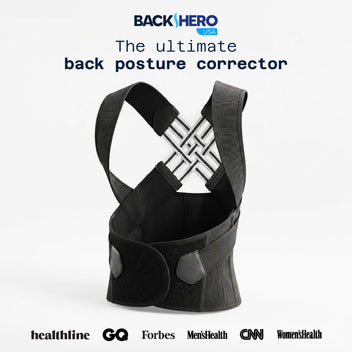
Back Hero USA Posture Corrector for Women & Men designed to heal, relieve upper back pain, and correct poor...
How to Prevent Forward Head Posture

Understanding how to prevent forward head posture requires a combination of posture awareness, ergonomic adjustments, muscle strengthening, and healthy daily habits. Forward head posture develops gradually, but with consistent effort, it can be effectively prevented and controlled.
Maintain Proper Sitting & Standing Posture
Maintaining correct alignment throughout the day is one of the most important steps in how to prevent forward head posture.
When sitting:
- Keep a neutral spine position
- Place both feet flat on the floor
- Sit with hips slightly higher than knees
- Support the natural curve of the lower back
- Avoid leaning your head toward the screen
When standing or walking:
- Use the ear–shoulder–hip alignment rule
- Keep ears stacked directly over shoulders
- Gently retract the chin (do not force it)
- Relax shoulders and avoid shrugging
- Distribute weight evenly through both feet
Optimize Your Workspace Ergonomics
An improperly set up workspace can quickly lead to poor neck posture. Optimizing ergonomics plays a major role in how to prevent forward head posture, especially for desk workers.
Monitor setup:
- Position the top of the screen at or slightly below eye level
- Keep the screen about an arm’s length away
- Avoid looking down at the monitor
Chair, desk, and keyboard:
- Use a chair with lumbar support
- Keep elbows close to the body at about a 90-degree angle
- Position keyboard and mouse within easy reach
Laptop vs. desktop considerations:
- Laptop users should use a laptop stand with an external keyboard and mouse
- Desktop setups are easier to adjust but still require proper alignment
Reduce Phone & Screen Strain

Screen habits strongly influence neck posture and are critical to how to prevent forward head posture.
Healthy screen habits:
- Hold phones at eye level instead of bending the neck
- Raise tablets and laptops closer to eye height
- Avoid prolonged downward head positions
Take regular breaks:
- Follow the 20-20-20 rule:
- Every 20 minutes
- Look at something 20 feet away
- For at least 20 seconds
- Every 20 minutes
- Stand, stretch, and reset posture during longer breaks
Strengthen Postural Muscles
Strong postural muscles help maintain proper head alignment with less effort, making them essential for how to prevent forward head posture.
Key strengthening exercises:
- Chin tucks to activate deep neck flexors
- Deep neck flexor exercises to improve cervical stability
- Upper-back strengthening, including:
- Rows
- Y–T–W exercises
- Resistance band pull-aparts
- Rows
Training tips:
- Perform exercises 3–4 times per week
- Focus on controlled movements and good form
- Gradually increase endurance rather than force
Stretch Tight Muscles
Stretching helps release muscles that pull the head forward and supports how to prevent forward head posture.
Muscles to stretch regularly:
- Chest muscles (pectorals)
- Upper trapezius
- Levator scapulae
Stretching guidelines:
- Stretch daily or after long sitting periods
- Hold each stretch for 20–30 seconds
- Combine stretching with strengthening for best results
Improve Sleep Posture
Sleep posture affects neck alignment for several hours each night and is often overlooked in how to prevent forward head posture.
Best sleeping positions:
- Back sleeping with a medium-height pillow
- Side sleeping with a pillow that fills the space between mattress and head
Pillow considerations:
- Avoid pillows that are too high or too flat
- Choose a pillow that supports the natural curve of the neck
Sleeping habits to avoid:
- Stomach sleeping
- Twisting the neck for prolonged periods
Use Posture Support Tools
Posture support tools can assist with how to prevent forward head posture, but they should be used carefully.
Posture braces:
- Provide short-term posture awareness
- Should not be worn all day
- Overuse may weaken postural muscles
Posture training devices:
- Offer gentle reminders when posture slips
- Work best when combined with exercises and habit changes
These tools should support—not replace—active posture correction strategies.
Daily Habits That Prevent Forward Head Posture
Building healthy posture is not about doing more—it’s about doing small things consistently throughout the day. These daily habits help prevent forward head posture from becoming a long-term pattern.
Posture Awareness Cues
Posture awareness begins with regular self-checks. Simple cues—such as gently stacking the ears over the shoulders or lightly tucking the chin—help reset head position before strain builds. Setting phone alarms, using sticky notes, or pairing posture checks with routine actions (like standing up or opening an email) reinforces proper alignment without effort.
Micro-Breaks During Work
Prolonged sitting is one of the biggest contributors to forward head posture. Taking short micro-breaks every 30–60 minutes allows tight muscles to relax and posture to reset. Stand up, roll the shoulders, stretch the chest, or perform a few gentle neck movements. These brief breaks reduce accumulated tension and prevent the head from drifting forward.
Consistency Over Intensity
Posture correction is most effective when practiced regularly rather than aggressively. Holding a “perfect posture” for short periods can cause fatigue, while gentle, repeated adjustments train the nervous system more effectively. Over time, consistent posture habits help maintain natural alignment with less conscious effort.
Practicing these daily habits makes forward head posture prevention sustainable, comfortable, and effective for long-term spinal health.
How Long Does It Take to Prevent or Correct Forward Head Posture?

When learning how to prevent forward head posture, it’s important to understand the difference between prevention and correction timelines.
Prevention vs. Correction Timelines
Prevention focuses on maintaining proper alignment before pain or structural changes occur. With consistent posture awareness and healthy daily habits, how to prevent forward head posture strategies begin working immediately.
Correction, however, takes more time. Mild cases may improve within a few weeks, while moderate to severe forward head posture can require several months of consistent effort.
Factors That Affect Results
Several factors influence how quickly posture improves:
- Age: Younger individuals often adapt more quickly, while long-standing posture habits take longer to change.
- Severity: The more pronounced the forward head posture, the longer correction typically takes.
- Consistency: Daily posture habits, exercise adherence, and ergonomic awareness play the biggest role in long-term success.
Common Mistakes That Make Forward Head Posture Worse
Avoiding common errors is an important part of understanding how to prevent forward head posture effectively.
Overusing Posture Braces
Posture braces can provide short-term awareness but overuse may weaken postural muscles. Without active muscle engagement, the body becomes dependent on external support rather than learning proper alignment.
Ignoring Upper-Back Strength
Focusing only on neck positioning without strengthening the upper back and shoulders creates imbalance. Weak upper-back muscles make it difficult to keep the head aligned over the shoulders.
Only Fixing Posture at Night
Correcting posture during sleep is helpful, but daytime habits have a much greater impact. Poor sitting, standing, and screen habits during the day can undo nighttime posture support.
When to Seek Professional Help
Knowing how to prevent forward head posture also means recognizing when self-correction is not enough.
Signs Prevention Isn’t Enough
Consider professional guidance if:
- Neck or shoulder pain persists or worsens
- You experience headaches, numbness, or tingling
- Posture does not improve despite consistent effort
Professional Support Options
- Physical therapy: Improves muscle balance, mobility, and postural control
- Chiropractic care: Addresses spinal alignment and joint restrictions
- Posture specialists: Provide personalized assessments and correction plans
Seeking professional help early can prevent long-term spinal strain and ensure forward head posture is addressed safely and effectively.
Back Hero USA Posture Corrector – Support for Preventing Forward Head Posture

When learning how to prevent forward head posture, daily habits and exercises are essential - but having the right support during long hours of sitting can significantly improve results. The Back Hero USA Posture Corrector is designed to provide gentle, practical assistance while your body relearns proper alignment.
Unlike rigid posture braces that force the shoulders back, Back Hero USA Posture Corrector focuses on natural correction through awareness and muscle engagement. Its ergonomic design helps guide the spine and shoulders into healthier alignment while still allowing comfortable, unrestricted movement throughout the day.
Key Benefits of Back Hero USA Posture Corrector:
- Promotes proper spinal alignment to reduce slouching and forward head positioning
- Helps relieve tension in the neck, shoulders, and upper back
- Encourages posture awareness during work, walking, and daily activities
- Lightweight, breathable, and discreet under clothing
- Adjustable fit (S–2XL) for different body types
- Available in Black for both comfort and style
When combined with posture exercises, ergonomic improvements, and consistent daily habits, the Back Hero USA Posture Corrector can support faster progress by reinforcing correct alignment—especially during prolonged desk work. Used properly, it becomes a valuable tool within a long-term strategy for preventing and correcting forward head posture.
Conclusion
Understanding how to prevent forward head posture requires a holistic approach that combines posture awareness, ergonomic setup, strengthening, stretching, and lifestyle habits. Forward head posture develops gradually, but prevention is entirely achievable with consistent daily effort.
By applying the strategies in this guide, you protect your neck, reduce pain, and maintain healthy spinal alignment for the long term - proving that learning how to prevent forward head posture is one of the most valuable investments you can make in your physical well-being.
Frequently Asked Questions
1. Is sleeping without a pillow bad for your neck?
It can be, especially for side sleepers or those with neck pain.
2. What pillow is best for forward head posture?
A pillow that supports the neck’s natural curve without pushing the head forward.
3. Can sleep alone fix posture?
No. Posture correction requires active daytime effort.
4. Should back sleepers use a pillow?
Yes, but it should be low to medium height.
5. Do posture correctors help?
Yes, when used alongside exercises and habit changes.

