

Must Do Exercises for Lower Back Pain Relief are not only for athletes or gym people. If your lower back aches after sitting, standing, or scrolling on your phone, the right movements can help calm tight muscles, wake up weak ones, and take pressure off your spine. You do not need fancy equipment. You just need a few consistent, smart exercises.
In this guide, Back Hero USA walks you through must do lower back exercises, how to do them safely at home, and how tools like the Back Hero USA Posture Corrector, Massage Roller, and Lumbar Support Cushion can support your recovery and help you stay comfortable during long days.
In this article
Why Exercises Are Essential for Lower Back Pain Relief
Before you jump into the must do exercises for lower back pain relief, it helps to understand why movement works so well. Lower back pain often comes from a mix of tight hips, weak core and glutes, and hours of sitting in a rounded position. Your back hurts because it carries the load that other muscles should share.

When you sit or stand in one position for hours:
- Muscles in your hips and lower back tighten up
- Core and glute muscles switch off
- Joints do not get enough movement and lubrication
Exercises for lower back pain relief reverse that pattern. They gently restore motion, activate support muscles, and spread load across your whole body instead of letting your lumbar spine suffer alone.
Must Do Exercises for Lower Back Pain Relief
This section covers simple, accessible must do exercises for lower back pain relief that many people can try at home. Move slowly, stay within a pain free range, and stop if anything feels sharp, electric, or wrong.
Pelvic tilts to wake up your core

Pelvic tilts are a gentle way to connect your ribs, core, and pelvis.
- Lie on your back with knees bent, feet flat on the floor.
- Gently flatten your lower back into the floor by tightening your lower abs.
- Hold for 3 to 5 seconds, then relax to neutral.
- Repeat 10 to 15 times.
Focus on smooth, controlled movement, not force. You should feel your lower abs working, not your neck or shoulders.
Cat cow for spine mobility

Cat cow is a classic move to mobilize the entire spine.
- Start on hands and knees, wrists under shoulders, knees under hips.
- Inhale and gently arch your back, lifting your chest and tailbone (cow).
- Exhale and round your spine, tucking your chin and tailbone (cat).
- Move slowly through 10 to 15 cycles.
This exercise reduces stiffness and reminds your spine how to move in a smooth, segmented way.
Glute bridges to take pressure off your back

Strong glutes help protect your lower back during walking, standing, and lifting.
- Lie on your back with knees bent and feet hip width apart.
- Squeeze your glutes and lift your hips until your body forms a straight line from shoulders to knees.
- Hold for 2 to 3 seconds, then lower with control.
- Perform 10 to 15 reps.
You should feel work mainly in your glutes and hamstrings. If your lower back feels pinchy, reduce the height or stop.
Dead bug for deep core stability

Dead bug teaches your core to stabilize while your arms and legs move.
- Lie on your back with hips and knees bent to 90 degrees and arms reaching toward the ceiling.
- Slowly lower your right arm and left leg toward the floor while keeping your lower back gently pressed into the mat.
- Return to the start and switch sides.
- Do 8 to 10 reps each side.
Move slowly and keep breathing. Your goal is control, not speed.
Hip flexor stretch to ease lower back pull

Tight hip flexors can pull your pelvis forward and increase stress on your lower back.
- Kneel on your right knee with your left foot in front, forming a 90 degree angle.
- Gently shift your weight forward until you feel a stretch in the front of your right hip.
- Keep your chest tall and avoid arching your lower back.
- Hold 20 to 30 seconds, then switch sides.
Add this after your strengthening exercises to help open up the front of your hips.
Child’s pose for gentle decompression

Child’s pose helps many people calm tightness in the lower back.
- Kneel on the floor, sit back toward your heels, and reach your arms forward.
- Let your chest soften down toward the floor.
- Breathe deeply into your ribs and lower back.
- Stay 30 to 60 seconds if it feels good.
If you need more ideas beyond this starter list, a future guide like 12 Best Posture Stretches to Improve Posture and Reduce Pain can become your next step once it goes live on your site.
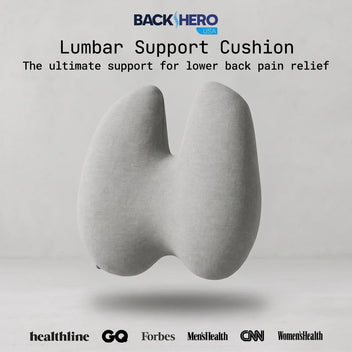
Back N Spine Lumbar Support Cushion offers ergonomic comfort, relieves lower back pain, improves posture, a...
Tools from Back Hero USA That Support Your Lower Back
Exercises are the foundation, but smart tools make it easier to keep your progress during work, study, and rest. Back Hero USA offers supports that work alongside your must do exercises for lower back pain relief, not instead of them.
Back Hero USA Posture Corrector for upright alignment

The Back Hero USA Posture Corrector focuses on the upper back and shoulders, but it still helps your lower back by stacking your whole spine in a more neutral line.
Benefits include:
- Gentle shoulder guidance so you do not slump forward
- More open chest so your core can engage better
- Less constant strain on neck and upper back muscles
When your upper body sits more upright, your lower back does not need to over arch to keep you balanced. To learn how to put on and adjust any brace correctly, a deeper article such as How to Use A Posture Corrector will be a useful companion resource.
Massage Roller to release tight muscles
The Massage Roller is ideal before or after your lower back routine to relax tight tissue.

You can:
- Roll gently along your glutes and outer hips
- Target tight muscles beside the spine and in the mid back
- Use short sessions to reduce soreness after exercise
This helps your muscles recover and makes it easier to move well the next day.
Lumbar Support Cushion for long sitting
The Lumbar Support Cushion fills the gap between your lower back and the chair so your spine keeps a gentle, natural curve.
It helps you:
- Avoid collapsing into a rounded position
- Share load more evenly through your spine and hips
- Make long sitting more comfortable after your exercises
Pairing a lumbar cushion with a guide like How to Correct a Bad Sitting Posture? will give you a strong foundation for both movement and desk time.
Simple Daily Habits That Make These Exercises More Effective
Your must do exercises for lower back pain relief work best when your day supports them. A few small habits can protect your progress.
Move often, not only in workouts
- Stand up every 30 to 60 minutes
- Take short walks during breaks
- Change positions instead of locking into one pose all day
Respect your limits
- Increase reps and sets slowly
- Stop any movement that creates sharp or shooting pain
- Rest when your body feels overly tired or inflamed
Build a long term mindset
Lower back relief often comes from small, repeatable actions rather than one big fix. Think in weeks and months, not just one workout.
Conclusion: Make Your Lower Back a Daily Priority
The must do exercises for lower back pain relief are simple, but they are powerful when you do them consistently. Gentle core activation, glute strength, hip mobility, and spine friendly stretches all work together to reduce strain, improve support, and help your lower back feel safer as you move through your day.
Tools like the Back Hero Posture Corrector, Massage Roller, and Lumbar Support Cushion can make it easier to keep that progress while you sit, work, and rest. When you combine movement, smart support, and daily habits, your lower back has a real chance to calm down and stay that way.
Frequently Asked Questions
1. How often should I do these lower back exercises?
Most people do well with these exercises 3 to 5 times per week. If movements feel gentle and comfortable, some can be done daily.
2. How quickly will I feel relief?
Some people feel a bit looser after the first session, but bigger changes usually come after a few weeks of consistent exercise and posture changes.
3. Can I do these exercises if I have a disc issue or sciatica?
You should always ask your doctor, chiropractor, or physical therapist first. They can tell you which movements are safe for your specific condition.
4. Do I need all three tools: Back Hero, Massage Roller, and Lumbar Cushion?
No. Start with what fits your main problem. For example, if you sit a lot, a lumbar cushion may be your first choice. You can add other tools later if needed.
5. Are these exercises enough to fix my lower back pain?
They can help a lot, especially when you also improve your sitting posture, move more during the day, and manage stress and sleep. If pain is strong, constant, or unexplained, you should always get checked by a professional.

