

The Crucial Role of Posture in Soccer goes far beyond looking “tall” on the pitch. How you align your head, shoulders, spine, and hips directly affects your balance, speed, shooting power, and injury risk, both in training and on match day. Small posture habits can be the difference between feeling light and explosive or tight and sluggish.
In this article, we’ll break down how posture shapes your performance, the most common alignment mistakes soccer players make, and simple posture-friendly habits you can apply right away. You’ll also see how Back Hero USA tools like posture correctors, seat cushions, and lumbar supports can help you recover better off the pitch and protect your spine over the long season.
In this article
Why Posture Matters So Much in Soccer
When you think about The Crucial Role of Posture in Soccer, you’re really talking about your body’s “base” for every movement. Whether you’re sprinting, changing direction, jumping for a header, or shielding the ball, your posture determines how efficiently force travels from your feet through your hips and core, up to your upper body.

Good posture in soccer helps you:
- Stay balanced under pressure and contact.
- Generate more power from the ground without “leaking” energy.
- React and change direction faster.
- Reduce unnecessary strain on your lower back, hips, neck, and knees.
Bad posture might not show up immediately, but over time it adds up as tightness, fatigue, nagging pain, and more time on the bench.
Common Posture Mistakes Soccer Players Make

Soccer players tend to fall into a few predictable posture traps:
- Forward head and rounded shoulders. Hours of phone use, gaming, and laptop time pull the head forward and round the upper back, making neck and shoulder strain, and tension headaches more likely.
- Excessive lower-back arch. Trying to “stand tall” can become over-arching the lower back, which compresses joints and stresses hip flexors.
- Uneven weight distribution. Leaning on one leg when standing, or always planting and turning off the same side without balancing strength and mobility.
- Collapsed sitting posture. Slumping into sofas, bus seats, and desk chairs after training can undo all the good work done on the pitch.
Recognizing these patterns is the first step toward fixing them.
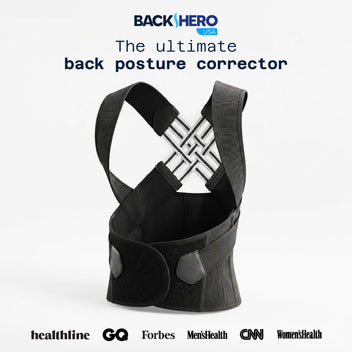
Back Hero USA Posture Corrector for Women & Men designed to heal, relieve upper back pain, and correct poor...
How Good Posture Boosts Soccer Performance
Understanding The Crucial Role of Posture in Soccer makes it clear that better alignment is a performance tool, not just a “nice-to-have.”
Better force transfer and power
When your spine and pelvis are stacked well:
- Your core can brace effectively.
- Your hips can rotate freely.
- Your legs can drive power straight through the ball instead of leaking it through wobbling or twisting.
This translates into cleaner strikes, stronger passes, and more stable tackles.
Quicker reactions and fewer injuries
Good posture also improves:
- Balance: You recover more quickly if you’re nudged or bumped.
- Body control: You can stop, cut, and turn with less risk of awkward twisting.
- Load distribution: Muscles share work more evenly, reducing overload on any single joint.
This lowers the risk of strains, sprains, and overuse injuries that can derail a season.
Training Better Posture On and Off the Pitch

You don’t need a completely different training program to respect The Crucial Role of Posture in Soccer. You just need to layer posture awareness into what you’re already doing.
During warm-ups and drills
- Focus on a long spine and relaxed shoulders in dynamic stretches.
- When sprinting, keep your head as an extension of your spine—not jutting forward.
- In strength work, prioritize quality alignment over heavy loads or rushed reps.
Strengthening your “posture muscles”
Include exercises that target:
- Glutes and hips (bridges, hip thrusts, lateral band walks).
- Core (planks, dead bugs, anti-rotation presses).
- Upper back (rows, band pull-aparts, Y/T/W raises).
A stronger “posture frame” makes good alignment easier to maintain when you’re tired in the 80th minute.
Back Hero USA Tools to Support Soccer Posture and Recovery
The work you do off the pitch is just as important for The Crucial Role of Posture in Soccer as what you do in training. This is where smart support tools can quietly protect your spine and help you recover better.
Back Hero USA Posture Corrector (Back Hero)

The Back Hero USA Posture Corrector (Back Hero) is designed to gently guide your shoulders back and open your chest—ideal for players who spend long hours sitting in class, on buses, or at a desk.
Back Hero can help you:
- Counteract “rounded shoulders” from phones and screens.
- Keep your upper back in a healthier position between training sessions.
- Build better postural awareness so you naturally stand taller and more balanced.
It’s best used in short, consistent sessions (for example, 15–60 minutes at a time), not worn all day. Think of it as a reminder and training tool, not a crutch.
Pressure Relief Seat Cushion

Travel, study, and gaming can all mean a lot of sitting which works directly against The Crucial Role of Posture in Soccer if you’re slumped in a bad chair.
The Pressure Relief Seat Cushion can help by:
- Redistributing pressure away from your tailbone and sitting bones.
- Encouraging your pelvis into a more neutral position so your spine can stack better.
- Making long bus rides or desk sessions more comfortable, so you’re not constantly shifting into worse posture just to escape discomfort.
Lumbar Support Cushion

If your lower back feels tight or tired after long days of training plus school or work, the Lumbar Support Cushion is a simple way to keep The Crucial Role of Posture in Soccer in mind even when you’re off the field.
- Fills the gap between your lower back and the chair.
- Helps maintain a gentle, natural curve in your lumbar spine.
- Reduces the habit of sliding forward and rounding your back when you’re tired.
Use it on your study chair, gaming chair, or car seat to give your spine a break between sessions.
Conclusion: Posture as a Hidden Performance Edge
The Crucial Role of Posture in Soccer isn’t just a catchy phrase. It’s a real performance edge. Better alignment helps you move more efficiently, stay more balanced under pressure, and recover faster between matches. It also protects your body from the cumulative stress of training, travel, and daily life.
By combining smart training habits with support tools like the Back Hero USA Posture Corrector, Pressure Relief Seat Cushion, and Lumbar Support Cushion, you can take care of your spine the same way you take care of your boots and muscles, proactively, not reactively.
FAQs About Posture and Soccer Performance
1. Why is posture so important in soccer?
Posture is your foundation for every movement on the pitch. Good alignment helps you transfer force efficiently from the ground up, stay balanced during sprints and tackles, and reduce unnecessary strain on your back, hips, and neck. Over a long season, that can mean better performance and fewer nagging issues.
2. Can improving my posture really make me faster or more powerful?
Indirectly, yes. When your spine, hips, and core are aligned, your muscles can produce and transfer power more efficiently. That means cleaner acceleration, stronger shots, and more stable changes of direction. Posture won’t replace training, but it can make the training you’re already doing work better for you.
3. I train hard—why should I care about posture when I’m just sitting?
The hours you spend sitting in class, on the bus, at work, or gaming all “teach” your body a default position. If that default is slouched with rounded shoulders, it’s harder to access strong, athletic posture when you play. Supportive tools like a good seat cushion or lumbar support can help you recover without collapsing into bad positions.
4. How can a posture corrector help a soccer player?
A posture corrector can gently remind your upper body to stay more open and aligned, especially if you spend lots of time on screens or traveling. Used in short sessions, it helps reduce rounded shoulders and forward head posture, which can contribute to neck and upper-back tension. It’s a training aid—not a replacement for strong muscles and good form.
5. When should a soccer player see a professional about posture or back pain?
You should talk to a physio, athletic trainer, or healthcare professional if you have persistent back, neck, or hip pain; if pain affects your performance; or if you notice obvious asymmetries (like one shoulder or hip sitting much higher). Early guidance can prevent small issues from becoming injuries that keep you off the field.

